Chapter 13. Vanguard of the Sichuan Legion: Ma Tianyuan
A chapter from ONE MORE WAY: The History Behind Chinese Esports, by BBKinG (Liu Yang). Translated from the Chinese original: 十三 川军先锋 马天元
First published in the author's Zhihu column on November 29, 2013: https://zhuanlan.zhihu.com/p/19626821
This translation was reviewed against the Chinese original on July 25, 2026. If you spot a mistranslation, a wrong name, or a factual error, please open an issue or send a pull request.
During China's eight-year War of Resistance against Japan, one out of every five soldiers came from Sichuan. The Nationalist general Li Zongren once said, "Throughout the eight years of resistance, the contribution of the Sichuan Army must never be forgotten." Popular sayings likewise praised the province's troops: "Sichuan troops know how to fight" and "There is no army without Sichuanese."
That same Sichuanese tradition of "taking responsibility for all under heaven" also left an indelible mark on the history of Chinese esports: Meng Yang in the Quake III era; Ma Tianyuan, Chongqing's 8DA team, and their website and forum in the StarCraft era; Ccsk.net, a Sichuan-based site that later became Esai, and the largely Sichuanese WNV team in the Counter-Strike era; and CQ2000, WE.TED, and many others in the Warcraft III era. Countless members of this Sichuan esports legion devoted their youth to the scene. I will dedicate a separate branch of this history to the "Sichuan-Chongqing Legion of Chinese Esports" in tribute to their contributions.
Ma Tianyuan, known online as MTY, is a pioneer of Chinese esports. Many people entered the industry after seeing a photograph of him and DEEP, whose Chinese nickname was Roast Duck. It was taken in South Korea in 2001, after the pair defeated a succession of strong international opponents to win the WCG StarCraft 2v2 world championship. In the photo, they stand on the podium holding the Chinese flag aloft. That single image had a profound and lasting impact on the public image of Chinese esports.
Ma Tianyuan was 20 years old that year. Time moves on. By 2013, at the age of 33, he was working in Shanghai at R2Game, an international company that publishes and operates Chinese mobile and browser games in Europe and North America. His job was to identify suitable game projects in China.
Ma Tianyuan was born on July 2, 1981, into a working-class family in Chengdu, Sichuan. He was bright, quick-witted, rebellious, and independent from an early age, and his parents could not rein him in. Of the boys he ran around with back then, not one went on to live what people would call a respectable life. Growing up in that environment, he naturally absorbed the Paoge code of loyalty and brotherhood, and even today you can still see traces of the big brother he once was. He seemed not to care about school, but he was very good at taking exams. Once, his family promised him a game console if he scored a perfect hundred in two subjects, and he did exactly that. It happened only once; otherwise, his grades were ordinary. Then he made a serious effort for the national college entrance examination, and that single effort got him into the computer science department of Sichuan University. Infuriating, isn't it?
In 1997, as soon as he entered university, Ma Tianyuan displayed a remarkable talent for PC games. His skill at Red Alert made him famous across campus. In his second year, he found a job at a gaming café. Because he was so good at StarCraft, however, "working" there mostly meant playing games: his reputation alone drew plenty of customers every day.
As internet access spread in 1998, Ma Tianyuan started talking to other gaming enthusiasts online. The Kunpeng battle.net server became the arena where he met both teammates and rivals. Through it, he got to know the StarCraft players everyone would later recognize: Jeeps, YR, Hong Zhefu, Hanyuliang (Chen Yu, a Chongqing native who was head of Tencent's Quantum Studio at the time of writing), Kulou, Redapple, and others. That is how the first wave of the Sichuan esports legion came together.
The rise of the AsiaGame Battle.net server and the founding of =A.G=
"Esports" is an imported term. In 1999, when AsiaGame was still being set up, the concept had yet to take hold in China. People here still regarded gaming as a form of leisure and entertainment. Overseas, however, esports was already emerging and had developed considerably through events such as the CPL. A number of ethnic Chinese living abroad and Chinese students studying overseas began introducing the concept to China. One of the most important was Hu Haibin, a Chinese American who was living in the United States at the time of writing. He knew one of AsiaGame's vice presidents, joined the company after returning to China, and convinced AsiaGame to make esports a major area of development.
Once back in China, Hu Haibin got to know the leading StarCraft players of the day, including Jeeps and Hanyuliang. After roughly half a year of discussions, on October 1, 1999, Hu Haibin, Jeeps, Hanyuliang, Ma Tianyuan, Yi Ran, CQZD Lightning Hand, Devil Angel, and others merged three teams—Rainbow from Chengdu, Angel from Nanchong, and CQZD from Chongqing—to form =A.G=, the AsiaGame team. This was very likely China's first fully professional esports team: its official players trained full-time and received salaries. It initially had just two disciplines and two salaried players, CHJ in Quake III and Ma Tianyuan in StarCraft, each earning 2,000 yuan a month. For its time, this was a remarkably forward-looking attempt to professionalize esports.
Inside AsiaGame's esports department, Hu Haibin and Jeeps managed the =A.G= club, YR (Yi Ran) handled logistics and team administration, and Hanyuliang handled publicity and built the Lunzhan Gaoshou website.
Worth noting here: today's AG.QQ VIP.Shikong Zhanxian club grew directly out of that original =A.G= AsiaGame team, although AG now stands for AllGamer. I will get to how that changed later.
First, some background on AsiaGame the company, which will make later events easier to follow.
AsiaGame was part of Yalian Yingtong Technology Development, a subsidiary of Haihong Enterprise Holdings. The company later operated several well-known online games in China: Millennium, Red Moon, Battlefield, and Worms Online. Haihong Holdings was also the parent company of Ourgame, the famous card and board game platform. Whether measured by registered users or company size, Haihong Holdings was among the leading pioneers of China's online gaming industry at the time.
Ma Tianyuan's first campaign, to the top of the world
In early 2000, 19-year-old Ma Tianyuan followed Hanyuliang, another vanguard of the Sichuan esports legion, to Beijing and began his career as a professional player. AsiaGame's official website was already live, and its battle.net server was in the final stages of preparation. The whole esports department had a clear goal: to promote the concept of esports and make the industry more structured.
That was the first time Ma Tianyuan had left Sichuan. He was still shy and did not talk much, keeping his head down and playing match after match. Seven people shared a one-bedroom apartment with two living rooms in Beijing, yet he was happy every day. Everything around him felt new.
When the first edition of WCG was held in 2000, it was still called WCGC; the name changed to WCG in 2001. Ma Tianyuan took part but was knocked out early, which drove him to train even more intensely. Apart from sleeping, he spent seventeen or eighteen hours a day playing StarCraft on the AsiaGame battle.net server.
Because AsiaGame had purchased Germany's advanced FSGS technology, its platform could support far more concurrent users than other battle.net servers. More people meant that matches were easier to arrange, so soon after launch it had more than 2,000 players online, including nearly every top StarCraft player in China. There were no ladders or matchmaking systems then. To find a game, you had to call for opponents in a chat channel. That gives you some idea of how hard it was for early esports players to improve.
Ma Tianyuan swept aside opponents on the AsiaGame battle.net server day after day. Yet because he was young and struggled under pressure, he kept missing out on titles in official competitions. People started calling him the Uncrowned King.
Choosing the path of a professional esports player also meant that he could not keep up with his studies, and he never received his degree from Sichuan University. I think that is a shame. Ma Tianyuan does not. He sees it as his own choice: without that past, none of what followed would have happened. He has no regrets.
WCGC 2000, the predecessor of WCG
Around 2000, Chinese StarCraft was in a "Warring States" period, with several centers of power divided by region:
Northeast China: led by the three swordsmen of the Northeast, Hong Zhefu, Eat and the Duel Prince
Southwest China: the 8DA team from Chongqing
Central China: the Star team
Shanghai: the SVS team
Beijing: the =A.G= team
Hubei: DEEP, also of =A.G=, and XiaoT
Guangzhou: the [T.S] TopSpeed team, whose leading figure was Shomaru
This list is certainly incomplete. Leave me a comment on Weibo, and after checking the information, I will continue adding to it.
I have laid out this map because the players in the Chinese division of WCGC 2000 were invited from these regions.
In 2000, the Chinese leg of WCGC, the predecessor of WCG, was organized by Hu Haibin, Hong Zhefu, Redapple, and others. Chinese esports was so small at the time that there was no nationwide qualifier. Instead, they invited 32 of the country's best players to compete. Ma Tianyuan was among them, but once again his nerves led to an early exit. Chinese StarCraft was already highly competitive that year. Unfortunately, Kulou was the only player whose visa for South Korea was approved, and he did not perform well at the world finals.
By this point, Ma Tianyuan fully understood that his problem was his composure under pressure.
He began training specifically to overcome that weakness. Finally, in early 2001, he won the Enorth–Tianjin Television StarCraft Challenge in Tianjin. It was his first national title, and because the event brought together top players from across China, the championship carried real weight.
Anyone who has failed over and over will inevitably begin to doubt themselves. That first meaningful championship often becomes a turning point and the source of renewed confidence. From then on, Ma Tianyuan began his run of titles.
With confidence came three titles in a row: the 2001 AsiaGame National 24-Player Elite Invitational, the Dongmei–AsiaGame National 64-Player Elite Invitational, and the Beijing regional qualifier for WCG China. Then, at the WCG China national final, Ma Tianyuan became nervous again. The top three would go to South Korea; he finished fourth.
And yet, call it fate if you like, the third-place finisher ran into visa problems, so Ma Tianyuan went to the world finals in South Korea after all. The Chinese delegation to that WCG had 16 members, including the well-known CQ2000 and Ma's former teammate DEEP. Hong Zhefu led the delegation.
What many people may not know is that they only found out about the StarCraft 2v2 event after arriving in South Korea.
They arrived in South Korea, discovered the event, and figured they had nothing to lose by entering. Hong Zhefu quickly signed DEEP and Ma Tianyuan up because they were AG teammates and had played together before. It is worth noting that the StarCraft 2v2 event was discontinued after 2003. As of this chapter's original publication in 2013, China's best result in the WCG individual StarCraft event was PJ's second-place finish in 2007. To the general public, however, "second place" simply does not compare with "gold medal." So once again, all we can do is sigh: that is fate.
The StarCraft 2v2 final was against Germany, whose lineup included a famous player known in China as Fisheye. The match was fiercely contested and reached 2–2, with more than a thousand spectators cheering in the arena. The moment they won the championship, the whole venue erupted in applause, but Ma Tianyuan's mind went completely blank. He says he remembers nothing until he stepped onto the podium and found himself holding the Chinese flag.
The prize for that WCG event was US$6,000. His share came to US$3,000, roughly 25,000 yuan. For a 20-year-old in 2001, that was a considerable sum.
Back home, Ma Tianyuan received a hero's welcome. CCTV and his hometown television station repeatedly reported on his victory. Neighbors held him up as an example to their children, while relatives and friends sang his praises everywhere. Almost overnight, the former troublemaker became a role model, carrying Ma Tianyuan to the peak of his life.
After the peak came the turn, and it came suddenly: the failure of paid access on AsiaGame Battle.net
On November 15, 2001, AsiaGame Battle.net officially introduced mandatory paid access. Plenty of esports people had expected this to be the moment Chinese esports took off. Looking back, it turned out to be the moment AsiaGame Battle.net began to collapse.
A great deal has been written about why that paid model failed, so I will not add much. Ma Tianyuan believes the timing was simply too early and the user base was not mature enough. Another major reason, in his view, was the inadequate distribution of prepaid cards. Eighteen yuan a month does not sound expensive, but convenient payment methods barely existed at the time. Many people had money but could not find anywhere to buy a prepaid card, while the free servers had all been shut down. The platform's user numbers fell sharply. Fewer players made matches harder to arrange, so people scattered to smaller, free battle.net servers, making it harder still to find opponents. It became a vicious circle.
Haihong Holdings was deeply disappointed and decisively abandoned esports. Two months after the paid model failed, it dissolved the esports department.
Ma Tianyuan still regrets what happened. He believed Chinese StarCraft was not far behind South Korea at that point and that, with a stable training environment, overtaking it was only a matter of time. Instead, everything suddenly came to an end. Ma Tianyuan returned to Chengdu. Jeeps later moved into game development, YR joined a real estate company, DEEP went to an online game company, and Hanyuliang joined Tencent. The group scattered.
As a professional player, Ma Tianyuan was not greatly affected by the closure. He continued training every day and traveled widely to compete. Then, in early 2003, Hu Haibin secured an investment from Intel and opened the VA Esports Hall in Chengdu, equipped with more than 200 computers. Ma Tianyuan joined the venue and continued training there, while StarCraft enthusiasts from all over China came because of his reputation.
Ma Tianyuan, the evergreen of the WCG delegation
From 2001 to 2003, countless new esports stars emerged in China and around the world, while Ma Tianyuan became one of the most consistent members of China's WCG delegation. He appeared at the world finals in South Korea every year. In 2002, he placed fifth in the WCG individual StarCraft event, the best international result of his career.
He also earned substantial prize money and made many commercial appearances during those years. By a rough estimate, Ma Tianyuan was making around 300,000 yuan a year. One of the better-paid engagements was an M-Zone event in Beijing that paid 10,000 yuan for three days. At the time, an annual income like that could buy an apartment.
But when I asked Ma Tianyuan whether he had bought one, he looked slightly embarrassed and said no: he had spent all his prize money treating friends to meals.
Ma Tianyuan's second campaign, and a disheartened retirement in 2004
In 2003, Pei Le, known as KinG, founded the professional esports team YollinY. He brought Ma Tianyuan in as well, but Ma Tianyuan stayed only two months, because he had found a sponsor and could go build his own club.
In early 2004, 17Game decided to launch an esports program with an annual budget of 500,000 yuan, and Ma Tianyuan was put in charge. Given the time and the amount, this was a substantial sponsorship, and Ma Tianyuan was optimistic. He recruited players in several games from across the country, including SYC and Guangmo—the pair nicknamed the Twin Towers because they were both extremely tall—as well as XiaoT and others. He also brought in a women's Counter-Strike team: New4, whose roster included 1212. By 2005, however, 17Game felt the program was producing no return and shut it down.
After so many years on the esports road, Ma Tianyuan finally felt tired and retired after WCG 2004. For the next three years, he lived in Wuhan and pursued work entirely unrelated to esports.
Ma Tianyuan's third campaign, looking for a new business model
Ma Tianyuan disappeared for three years, until the WNV team broke up in 2008 and XiaoT returned to Wuhan.
XiaoT and Ma Tianyuan had known each other since 2002, when XiaoT was only 14, and Ma Tianyuan had always treated him like a younger brother. When they reunited, they talked and discovered that both still shared the same esports dream. Ma Tianyuan then secured local investment, founded the VA club, established teams in four games, and signed many well-known players: XiaoT and Sed—an iG StarCraft II player at the time of writing—in Warcraft III, 430 in Dota, GOL in StarCraft, and KingZ in Counter-Strike.
The esports coaching model
This time, Ma Tianyuan was no longer as blindly optimistic as he had been when he first ran a club. He proposed a clearly defined business model that would allow the team to support itself: esports coaching.
The system worked much like personal training at a gym. Members could book a coach for a specific game. Each coach set a different rate, with more famous coaches charging more per hour.
In 2009, Ma Tianyuan rented space in a sports center in Wuhan, installed 30 computers, and began testing the model. The players trained and competed as usual, setting aside some time each week to provide private coaching. Coaching brought in some revenue, sponsors contributed more, and the team could essentially support itself. After a year, the club had attracted nearly 200 members. Still, the wider environment and the limits of Ma Tianyuan's own fame made it difficult for the model to grow quickly.
In 2010, Ma Tianyuan was approaching 30. Looking back on a life of ups and downs, he returned to Chengdu to marry and start a family.
Ma Tianyuan left, but XiaoT was still young. He took the entire VA roster with him and joined CCM in Beijing. CCM was later acquired by iG, which is why the iG team that people first came to know was led by XiaoT.
Ma Tianyuan's fourth campaign, the rebirth of AG
After returning to Chengdu, Ma Tianyuan got to know the owner of the Shikong Zhanxian internet café. There he discovered a highly promising CrossFire team called FC and met its manager, Feifei. Ma Tianyuan invited Feifei to help operate the VA club, then recruited Yi Ran, a former manager of =A.G=, as general manager of the VA Esports Club. After discussions with Hanyuliang, Jeeps, and Lightning Hand, they decided to revive the AG name. Everyone still felt attached to it, although the words behind the initials clearly needed to change. AG now stood for AllGamer.
And so AG.Xunyou.Shikong Zhanxian was reborn, known today as AG.QQ VIP.Shikong Zhanxian.
The new AG competed in four games—CrossFire, League of Legends, Dota, and StarCraft II—while continuing the coaching model. Its competitive results were strong, consistently placing it near the top. In 2013, AG won the CFPL championship, and the entire club appeared to be heading in the right direction. Yet even as the club thrived and its players earned high salaries and bonuses, Ma Tianyuan and the rest of the management were not well paid. That was the trouble his code of brotherhood brought him: by nature, he would never take a share of the players' money. But he still had to make a living.
Ma Tianyuan's fifth campaign, fighting for his family's happiness
Ma Tianyuan's daughter was born on June 6, 2012, and her arrival was a complete awakening. After all those years of ups and downs in esports, enough was enough. He did not mind drifting from place to place on his own, but he could not let his family suffer alongside him. He realized that he needed to pursue something more stable. So he set out once again, moving to Shanghai to join R2Game and start from scratch.
A short aside here. You may have noticed that I have never included a single photograph in this history. That was deliberate. I wanted to know how many people would read something made up entirely of text. But I simply had to include this photograph of Ma Tianyuan's daughter. The first time I saw it, her smile touched me. It was as though I had been purified in an instant, my whole body filled with happiness. It was a truly extraordinary feeling, and I hope to pass that happiness on.
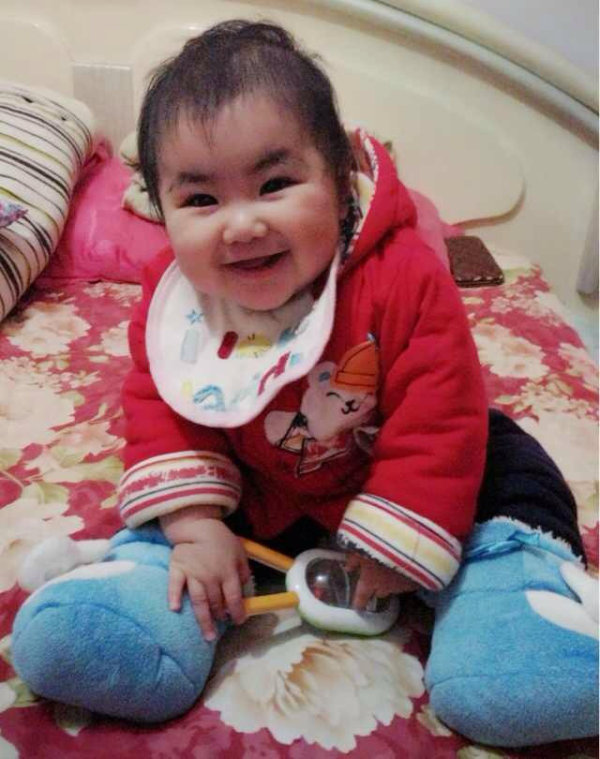
Ma Tianyuan said he had set the photo of his daughter as the background of his alarm screen. No matter how tired he was, the moment the alarm went off and he dragged himself up to see it, he was immediately filled with energy. As he spoke, his eyes never left the photo on his phone, and his gaze was full of joy.
Watching him, I was overcome with emotion, and that classic voice-over began to play in my head: the carefree wanderer who spent his life at war and slew countless enemies has finally met the woman who gave him three moles. From then on, he willingly puts on the golden headband, reins in his proud and untamed nature, takes up the sea-calming, gold-banded iron staff—weighing 13,500 jin, two zhang long, as thick as a bowl, and able to grow or shrink, lengthen or shorten at will—and sets out on a new journey.
May all be well on the road ahead.
Ma Tianyuan, vanguard of the Sichuan Legion of Chinese Esports.