Extra: A Baseball Game in Boston
An extra chapter from THE HISTORY BEHIND CHINESE GAMES, the author's unfinished second book, by BBKinG (Liu Yang). Translated from the Chinese original: 番外篇 波士顿棒球记
First published in the author's Zhihu column on September 25, 2014: https://zhuanlan.zhihu.com/p/19856082
This translation was reviewed against the Chinese original on August 3, 2026. If you spot a mistranslation, a wrong name, or a factual error, please open an issue or send a pull request.
Through August, on the east coast of the United States, I kept wanting to see a live sporting event. Unfortunately the NBA, which I wanted to see most, would not start until October, and although ice hockey and American football were being played, the fixtures never quite lined up with my itinerary. Then I happened to look at the official site of MLB, Major League Baseball, and found this game between the Boston Red Sox and the Houston Astros falling exactly on the day before I was due to leave Boston. So I moved fast and bought this ticket on the Red Sox's official site.
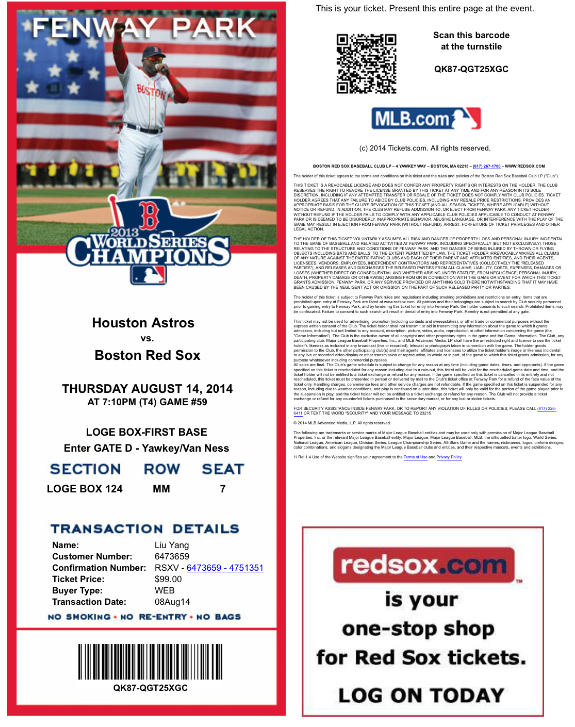
In the United States a lot of tickets can be bought online. The system emails the ticket to you, you print it at home, bring it with you, and have it scanned at the gate.
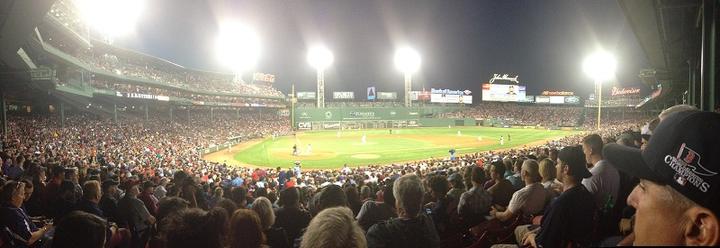
Back to the point. The Boston Red Sox play at Fenway Park, an old ground with a long history and close to 37,000 seats. It is easy to reach as well, not far from the city centre and served directly by the subway. The whole way there I passed people in Red Sox shirts. It really did feel like a public holiday.
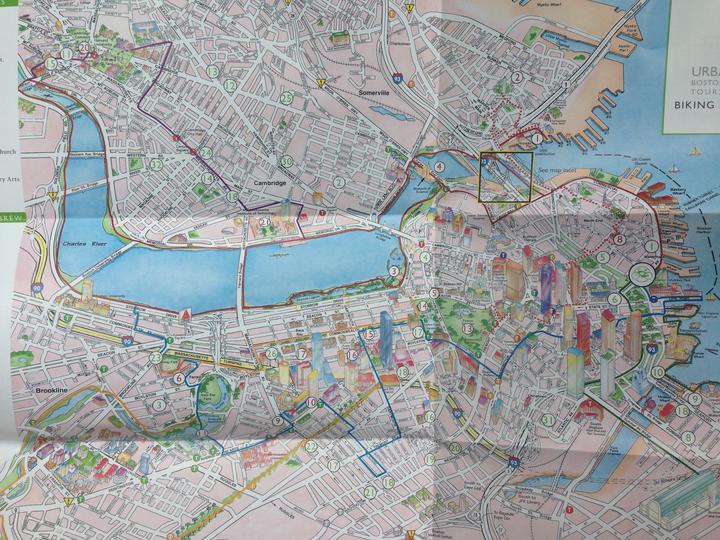
Below is a map of Boston. The large cluster of tall buildings jutting out on the middle right is downtown. Number 20 in the top left corner is Harvard University. Number 21, beside the bridge in the middle, is MIT. Number 23 in the bottom left corner is Fenway Park. Everything in Boston is close to everything else. I rented a bicycle and had covered the whole place in two days, which nearly finished off a fat man like me.
Now let me put down some background on Boston, to set up what comes later.
Bostonians are very keen on sport. I looked up the city's history: it was founded on September 17, 1630, by Puritan settlers from England. It is a classic city with a traditionally white majority. The Puritans had an exceptionally strong moral code, demanded a great deal of themselves and placed enormous value on education, which gave the Boston area solid foundations in both educational quality and public order. Health, self-discipline and a positive outlook became the spirit of the city.
Put another way, baseball, a game that makes very high demands of rules, teamwork and technique, belongs to Boston by nature. In fact this is where modern baseball was born. English settlers refined the traditional game of cricket, combined it with other games and created an entirely new set of rules, and two hundred years later they founded a baseball league and began putting the sport on a formal footing.
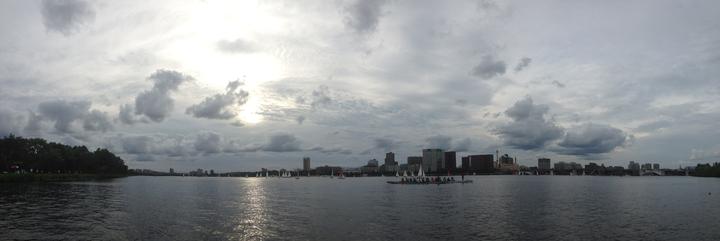
The picture below is the Charles River, which runs across Boston. The banks are full of runners and the water is full of sailing boats and rowing sculls. Bostonians really do love sport.
Americans spent more than 200 years working baseball into the formal shape it has now, whereas Chinese esports took only 13 years to get from its beginnings in 1998 to the founding of a league around 2011.
Which shows that people are getting faster at working out a new discipline, and that the time it takes to standardise and consolidate an industry is getting shorter. The direction, though, is broadly the same: managing players, coordinating competitions, overseeing player transfers, and balancing the interests of every role in the business so that all of them can grow in a healthy way.
Reading Boston's history left me with a question. What culture was it that nurtured the growth of Chinese esports? That is a separate subject, of course, and I will not open it up here.
Back to the story. On the day of the game I got to the ground and found a genuine celebration going on.
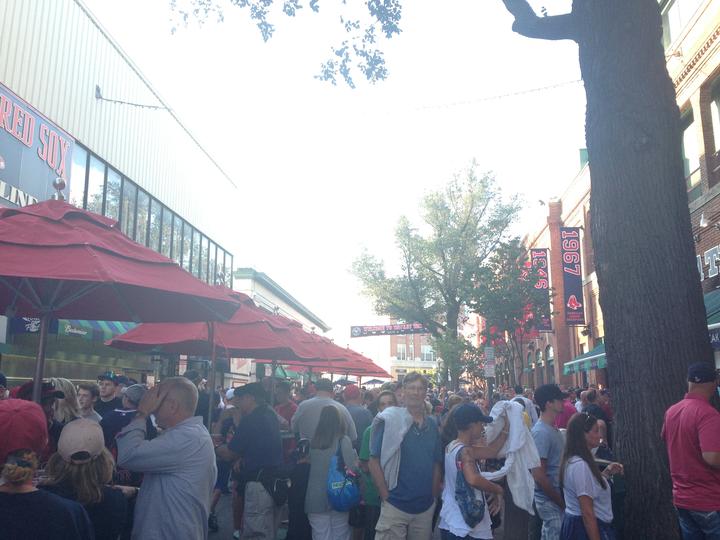
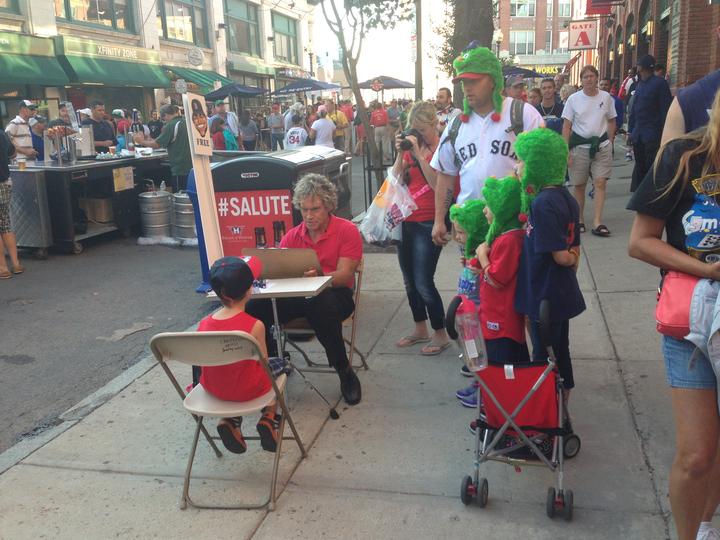
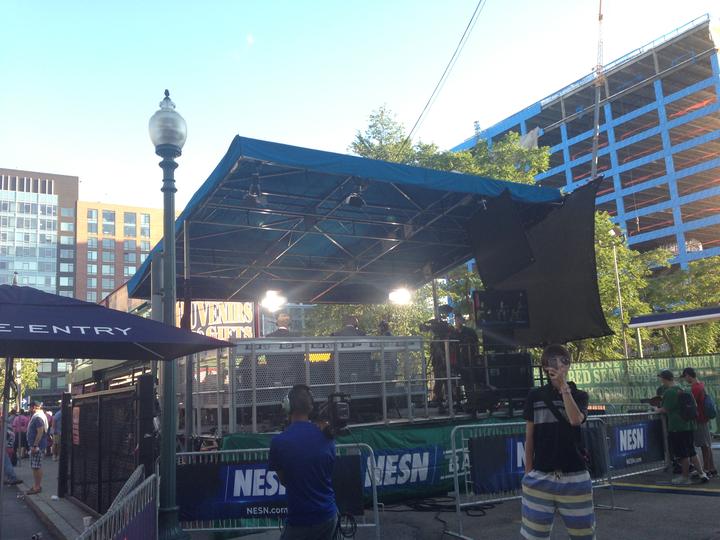
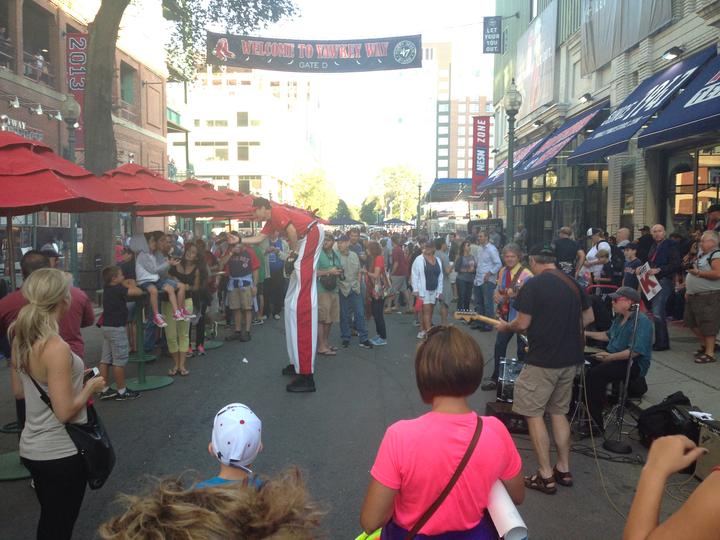
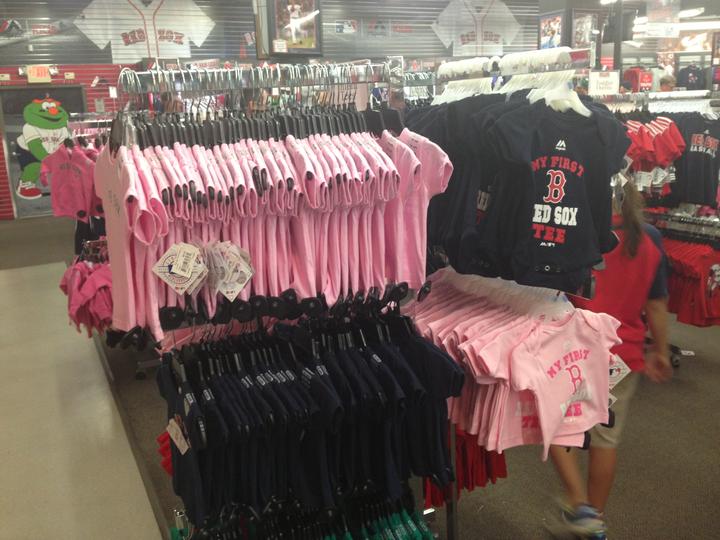
Shops and restaurants surround the ground and the range of goods on sale is comprehensive. Merchandise is something I am very interested in, so I took a lot of reference photographs. I will not put them all here, there would be far too many, so here is just one. They have even developed a large range of products aimed at children. A sport that has thrived for a hundred years really is a different proposition.
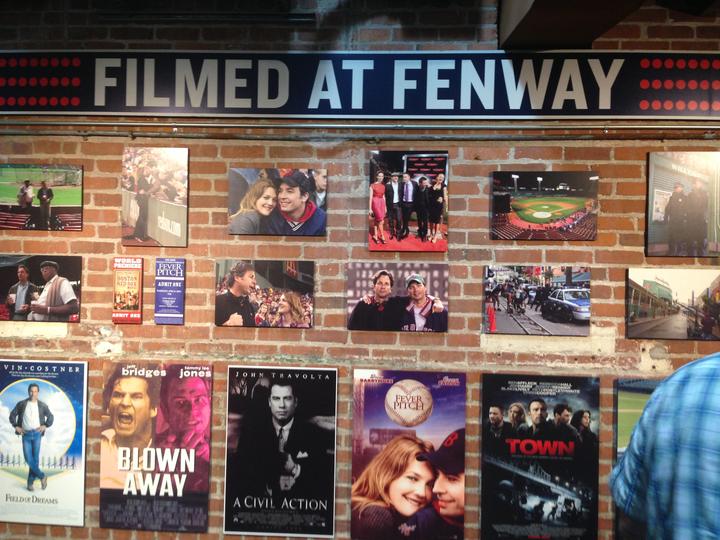
These are the films and television programmes that have been shot at Fenway Park.
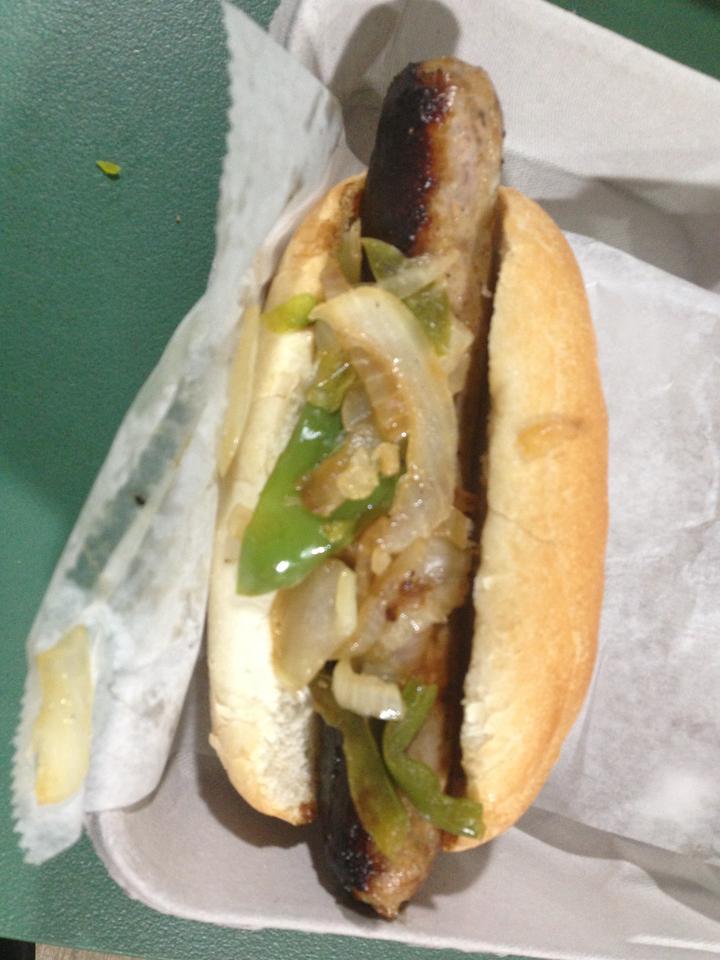
This is the Italian sausage they sell inside the ground. Eating one while you watch is hugely satisfying.
Once I had seen enough of the area around the ground I went in and took my seat, and found a lot of elderly people around me. The old couple beside me looked to be past 60 and had driven two hours to watch the game. When the old lady learned that this was my first live baseball game, she spent the whole evening warmly explaining every part of it to me. What struck me most was how fluently she used her phone to look things up online. I had always assumed that the mobile internet was reasonably well adopted in China, but after a few more encounters with American grandmothers teaching me how to use phone apps I came away feeling that I had been thoroughly wrong. One other thing amazed me. In a stadium that size, the mobile signal was excellent from start to finish.
I will not go through the game itself in detail. Let me set down a few thoughts instead.
- Baseball's rules give the whole game a rhythm that is good to watch.
What makes it watchable is this. The rules are simple and clear, the pacing alternates between tension and release, any pitch could turn into a home run, every inning has its peaks large and small, and the gaps between changeovers are short, but long enough to go to the toilet or buy something to eat. The whole game ran from 7 pm to 10.30 pm, three and a half hours, and the subway was still running to take me home afterwards.
Control of time and pacing matters a great deal. If esports events want to reach a wider public, I think the rules need adjusting too. At present a competition often runs all day long, which exhausts the organisers and exhausts the audience as well. WCG did at one point successfully turn its event into something along the lines of ChinaJoy, China's big games expo, but that does not help esports become a fast-moving everyday entertainment product for a mass audience.
I think the segments should be made shorter and more numerous, the way the NBA once moved from two halves to a system of shorter periods, so that both the rhythm and the overall length of a match are adjusted. Keep each period within 20 to 30 minutes and the total to around three hours, and you have an evening's entertainment that suits young and old alike.
We should be moving closer to forms such as film and live concerts, fitting ourselves to the public's entertainment habits, rather than asking the public to adapt to esports.
Yet the esports titles we have at the moment do not seem able to take that kind of adjustment. The pace is still on the slow side. Which means the plan of adjusting the rhythm and moving into mass entertainment will have to wait for the esports titles of the future.
- The design of the details around the game
Everybody knows about the national anthem at the start. I filmed a very short video of it, which you can watch here.
Video: The national anthem before the game at Fenway Park, home of the Boston Red Sox, on Youku
Inviting a celebrity to throw the ceremonial first pitch is also well known, but this time was a little different. Four veteran baseball stars threw it out together.
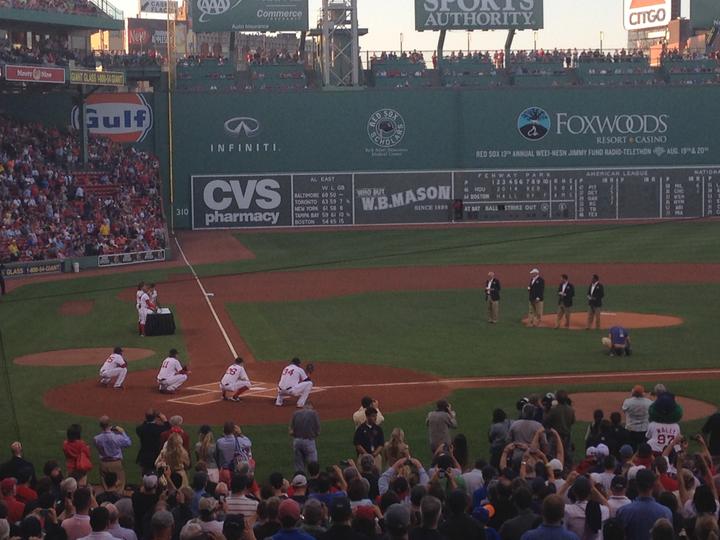
Then there are details you may not know about. Between innings a celebrity or a war hero is brought out onto the field and the crowd rises to salute them. There are songs, too, where people put their arms around whoever is beside them and sway and sing together. Either there are prompts inviting the crowd to join in, or the camera picks out spectators and they perform in every way imaginable in front of it. Whatever happens, at the ground you never feel bored, not even during the breaks. That depth of experience in staging an event is what keeps the appeal of the competition intact.
These are things I had noticed before, but after experiencing them in person and then looking back at our own events, there really are a great many places where we could do better.
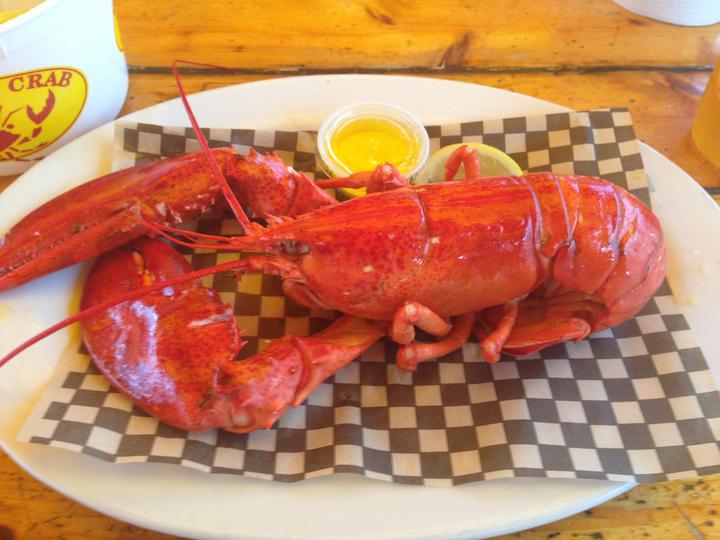
Finally, I have to say that Boston really is a fine place, with beautiful surroundings and safe streets. I strongly recommend going to see it, and even the perfect texture of a Boston lobster is reason enough to make the trip. A friendly tip: be sure to order a big lobster of over two pounds, because the texture is completely different. I also recommend a place that is cheap, generous with portions and popular with locals, the Barking Crab, at number 9 in the bottom right corner of that map above. Superb!