Chapter 41. Starting a New Line in Esports: Liu Yifeng
A chapter from ONE MORE WAY: The History Behind Chinese Esports, by BBKinG (Liu Yang). Translated from the Chinese original: 四十一 另起一行做电竞 刘义峰
First published in the author's Zhihu column on March 28, 2016: https://zhuanlan.zhihu.com/p/20584882
This translation was reviewed against the Chinese original on August 1, 2026. If you spot a mistranslation, a wrong name, or a factual error, please open an issue or send a pull request.
I have written about a great many successful professional esports players. Today I want to write about one who was not successful.
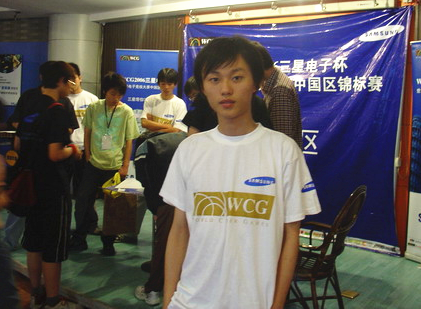
Liu Yifeng, known online as Daobatu, the Scarred Rabbit, is a former professional Warcraft III player. Anyone who followed Chinese Warcraft III may have heard his other name, SoZ.afeng. It is plainly not a name filled with acclaim and honours, the way Li Xiaofeng's Sky is.
Quite the opposite. The best result of Liu Yifeng's playing career was third place in the Chinese division of the Warcraft III event at ESWC 2005, and the 5,000 yuan prize that came with it was a year late in arriving.
Worse still, at the WCG Hangzhou regional in 2006 he wanted a win so badly that he made an elementary mistake and set off one of the most notorious fixing scandals in the history of Chinese esports, the one people called the resurrection build. He was condemned and abused for it at length.
All that hostility left him dispirited, and he gradually withdrew from competition and moved into work behind the scenes on the PGL tournament. Just as the event was gathering momentum, the global financial crisis of 2008 arrived. He struggled on without funding until 2010, then left the esports industry with no other option and moved back from Beijing to Shanghai.
A general's glory is built on the bones of ten thousand men. Look at Liu Yifeng at that point from any angle and he was one of those bones.
With nothing else for it, he had to start a new line and begin again.
In 2011, before the Taobao shop model had taken shape in esports, joint operation deals between the browser game Shen Xiandao and well-known figures brought many stars of the Chinese esports scene a first fortune on the scale of a million yuan.
I know that many esports fans dislike this part of the story.
But for a Chinese esports scene that had only just survived the financial storm, that wave of browser game joint operations was both a shot in the arm and an enormous reassurance. It proved that esports could support itself, and support itself well.
That first fortune also gave many streamers the capital to expand their Taobao shops, which accelerated the arrival of the video plus esports plus Taobao model and had a lasting influence on the Chinese esports industry.
And the man who made it happen was that same bone: Afeng, Liu Yifeng, now director of operations at Xindong Network and head of the Shen Xiandao project.
Afeng has become something of a legend in the games industry, but he says what he misses most is his time as a professional player, chasing an esports dream.
Afeng was born on August 11, 1983, near the City God Temple in Shanghai. He had a games console and a computer to play with from primary school onwards, so he came to games earlier than others his age and played them better than the people around him.
After passing the entrance exam for Shibei High School, one of Shanghai's key schools, Afeng's talent for games found full expression in the internet café. Whatever competitive game the café had, he could play it better than anyone else there. In that place he was a star and a god of the game, and he mattered.
His marks, meanwhile, collapsed. He got into a university, but a poor one, and by his second year he had passed only one of his nine courses, physical education. In 2003 he was expelled and sent home.
Adrift, Afeng asked his mother whether he could try being a professional esports player. She agreed.
His family paid for a new computer, and he practised Warcraft III at home for six months. At the end of the year he entered the CBI competition in the Shanghai area and finished second. The prize was only 200 yuan, but the winner was MagicYang, and the top two both got a free trip to Beijing. It was the first time he had travelled far from home.
That small success doubled his confidence and gave him a vague sense that this might be a road he could take.
His performance at the ESWC Shanghai regional in 2004 then caught the eye of the captain of the Shanghai team SOZ, and Afeng finally became a professional player on 1,000 yuan a month. The salary was small, but it fulfilled his dream of turning professional.
Esports, though, has never been an easy road.
2006 came round quickly, and with it the WCG Hangzhou regional. Three years as a professional had made Afeng modestly well known, but he needed results, and soon. He wanted to win badly.
WCG qualifiers were decided by a single game. Afeng's first opponent was a complete unknown, and the match should have been an easy one. To his astonishment he lost, which meant he was out in the first round.
So Afeng, desperate for a win, asked his opponent whether he would hand the place over, offering to share his prize money with him.
His opponent had come along simply to take part in WCG and had no plans to go professional, so he agreed.
Afeng seized the chance, beat every player in front of him in a single run, won the Hangzhou regional and earned a place at the WCG China national final in Beijing.
After the event, though, somebody dug out the replays of Afeng's qualifier matches. How could a player knocked out in his very first game go on to win the regional title?
Accusations came flooding in from every direction: the event was fixed, a player had come back from the dead, an opponent had been bought, the referees had been bent. On Replays.net, then the largest Warcraft III forum in China, posts about Afeng's resurrection build filled the boards for ten days, every one of them condemning him.
Looking back on it, Afeng thinks he was too young and too desperate for a win that would prove something, and that he lost sight of the rules of competition and of his own good name.
After that affair he began to see how important a person's reputation is. Even if you beat everyone in the end, losing your reputation costs you everything.
Over the next few years Afeng tried casting and tried running events, starting from nothing. He worked on CIG and PGL in Beijing, and by PGL's third season the broadcast was drawing 500,000 unique IP addresses watching online. He had begun to see the first light of hope.
But esports events at the time had no way of making money on their own and depended entirely on sponsors, and sponsors were both inconsistent in their attitude to esports and unconvinced by its conversion rates. So for all PGL's popularity, its title sponsorship was worth only 100,000 yuan in cash plus 100,000 yuan in clothing.
Money like that was never going to develop esports.
Then the global financial crisis of 2008 frightened every sponsor away. After struggling on for three years, Afeng had no choice but to return to Shanghai.
The crisis showed Afeng exactly where the weakness of esports lay: in its ability to make money.
Carrying that question with him, he began looking for a new job. Talking one day with Zhao Yuyao, an older schoolmate from his high school days and now COO of Xindong Network, he found that the problem facing VeryCD, the eMule site that was Xindong Network's predecessor, was the exact opposite of the one facing esports.
Xindong Network already had a great deal of experience in turning traffic into money through games. Its data monitoring in particular had grown into a highly efficient back end analytics system that could calculate the precise return on every batch of traffic it sent.
But where was the traffic to come from? That was the hard question for Xindong at the time. To solve it, the company was willing to give away 70 per cent of the profits to large channels such as 360 and Tencent in exchange for the traffic they brought in.
So could esports, with all the attention it commanded, count as a large channel too? Could esports and browser games make up for each other's weaknesses?
In early 2011, with that question in mind, Afeng decided to join Xindong and wait for a chance to test the idea.
He had not expected the chance to come so quickly.
Afeng says he will never forget a day in March 2011 when Huang Yimeng, Xindong Network's CEO, walked over to him holding a contract and told him to take charge of the project.
The game was Shen Xiandao, still only half finished at that point.
Being in charge of the project did not mean he could start doing things his own way straight away, of course. He first followed Xindong's established practice for operating a game and drove traffic in from the large games channels. Three months later he had been through very nearly all of them, and every one of them was making good money.
Xindong was delighted and wanted more channels to bring users in.
Afeng judged the moment right and set about convincing the company that esports stars were a large channel everyone had overlooked, and one that was no worse than the others at either brand promotion or driving traffic. Give them the same revenue share as the big channels, he argued, and the streamers would want to promote the game themselves, which would work extremely well.
Esports in 2011 was waiting to be rebuilt from the ground up. Everyone had only just come round after the earthquake of the financial crisis and understood that a stable life meant being able to support yourself. So everyone was looking for a way to turn attention into money.
That made conditions for Afeng's approach very good indeed. One day in October he called together a few old friends from esports and offered them the same 70:30 split the large channels got if they would promote Shen Xiandao, with the esports stars taking 70 per cent of the profits. Nothing like it had ever been offered before.
Years later, one of those stars told me that when he heard 70:30 he thought Afeng was a decent sort for being willing to give away 30 per cent. When he found out that he was the one taking 70, he was stunned.
The new model was in place, so it was time to get to work. Everyone found their own way of doing it, and the promotion of Shen Xiandao spread everywhere in the esports scene.
By April 2012, Shen Xiandao was taking more than 100 million yuan a month. Afeng puts that down to the quality of the game itself, combined with how hard everyone worked at promoting it.
Xiaocang, 09, Sky, the StarCraft Old Boys and others, more than fifty esports stars in all, made their first fortune in that wave of promotion. Word spread from one person to ten and from ten to a hundred, and more stars from other fields came forward to work with them.
The win-win model of esports plus joint game operation was an enormous success, and Afeng carried it over to other Xindong games such as Xianxia Dao, Jiangshen and Shenyuan.
In March 2016, the high definition remastered mobile version of Shen Xiandao is about to launch. Afeng says that this time he will bring in even more stars and streamers to promote it together, and give people something to enjoy with a better game.
A new line, and a better one. Liu Yifeng.
Editor's note
Over the course of the development of Chinese esports, a great many people in the industry have been forced out of the field they loved, for all sorts of reasons. They may have left, and they may be doing work that has nothing to do with esports for the time being, but they still follow the industry closely. At the right moment and through the right opening, they come back to esports with new experience and new ideas, and bring the industry new points of growth.
Welcome home, esports people.