Chapter 30. China's World-Class Counter-Strike In-Game Leader: Alex, Bian Zhengwei
A chapter from ONE MORE WAY: The History Behind Chinese Esports, by BBKinG (Liu Yang). Translated from the Chinese original: 三十 世界级中国CS指挥官 Alex卞正伟
First published in the author's Zhihu column on March 2, 2014: https://zhuanlan.zhihu.com/p/19691636
This translation was reviewed against the Chinese original on July 30, 2026. If you spot a mistranslation, a wrong name, or a factual error, please open an issue or send a pull request.
What does it take to be a world-class Counter-Strike in-game leader?
December 11, 2005, Shougang Gymnasium, Beijing. China's wNv.Gaming against South Korea's Project_kr, the Counter-Strike grand final of the third WEG world championship.
It was a best-of-three. wNv dropped the first map, levelled the series, and forced the Koreans into a decider on Inferno.
wNv fell behind from the start and went down 3:6. Things could not have looked much worse. They had no money left, so it was an eco round and all they could buy were pistols. In the arena, the crowd went dead silent with nerves.
Alex, wNv's captain, decided to stake everything on a rush onto the B site.
The Koreans defended for their lives, and a vicious close-quarters firefight broke out on B.
Everyone on wNv died except sakula, and only one Korean was left on the site. Locked in a desperate duel, the two men circled and jumped as they traded shots at point-blank range. Then sakula's magazine ran dry, and so did his opponent's.
In the instant the Korean started reloading, sakula pulled out his knife without a moment's hesitation, spun in close, and stabbed him to death.
They still lost that round. But the building caught fire.
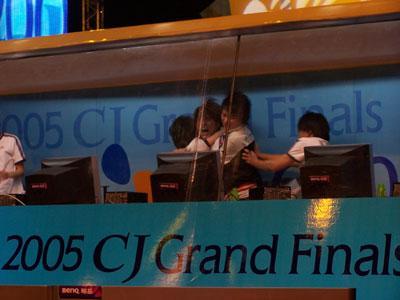
The players on both sides went wild, and so did every spectator in the hall. The cheering nearly took the roof off. wNv's morale surged, and they ran the score to 8:7 as the match went into the second half.
As captain and in-game leader, Alex allowed himself no complacency, staying composed against the Koreans' sharp attacks.
In the final round, Project_kr committed to the A site. wNv read it correctly and rotated back in time. They traded two of their own for four Koreans and killed the bomb carrier. Then, staying perfectly composed, they set a crossfire and took down the last opponent.
In the end, wNv won 16:12 and became the WEG 2005 world champions.
They had won. In that instant, the dream became real.
Alex says what stayed with him most was the match room itself. The Koreans had soundproofed it so well that only when he pushed the door open did the roar of applause and cheering come crashing into his ears all at once. In that moment, he felt like the happiest man in the world.
Alex, Bian Zhengwei.
The well-known Norwegian Counter-Strike player bsl, who played for top international sides including NoA, said Alex was the most cautious leader he had ever faced. Bootman, tactical coach of Team 3D, said flatly that Alex was the in-game leader he least wanted to run into.
Through all the acclaim, Alex remained unfailingly modest and courteous, always generous in crediting his teammates. Add his sunny good looks and a public life without a hint of scandal, and sponsors saw him as the perfect face of Counter-Strike.
All the glory and all the dreams came together in that one moment.
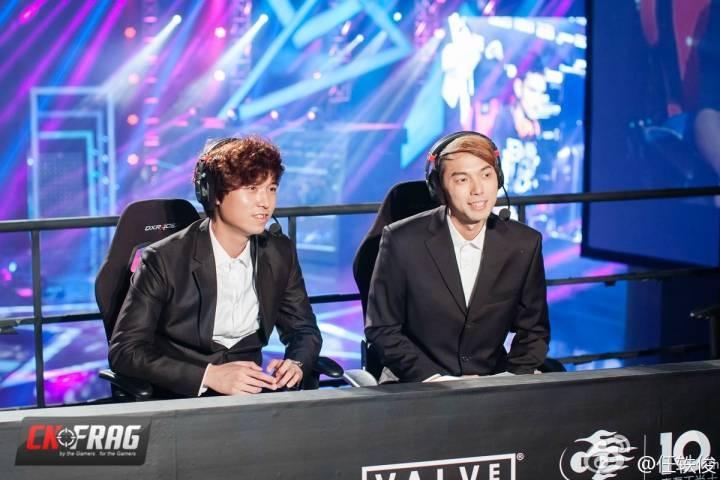
(Alex, Bian Zhengwei, is on the left of the photograph. On the right is the famous former Counter-Strike professional 117.)
Now pause time and start rewinding. The world slowly darkens, until there is no light at all.
A childhood without money and a football career cut short
Bian Zhengwei, who was not yet called Alex, was born on February 28, 1982, in Jiulongpo District, Chongqing. His father died of illness while he was in junior high school. His mother worked at a power plant, and the household also included his maternal grandparents and the children of his mother's younger brother. The full weight of all those lives rested on his mother's modest income and his grandmother's pension.
Yes, this is another story that begins in sadness.
Alex loved football from early childhood and started playing at four. In fourth grade a teacher spotted him and wanted to send him to a state sports training squad for proper coaching, but transferring his household registration to another school district cost 5,000 yuan, and his family simply could not produce that kind of money. So the professional route was abandoned, and he went around joining other people's pickup games instead.
Because he was fearless about carrying the ball and taking players on, Alex already had a small local reputation by his third year of junior high. A coach happened to walk past one of his games, liked what he saw, and brought him into the youth team of Chongqing Hongyan, then a Jia-B club. He was finally a professional footballer, with room and board covered and a training allowance of 800 yuan a month. It was not much, but for someone as naturally optimistic as Alex it was already plenty. As he saw it then, he was fed and housed and allowed to play football, and he could even send money home. What could possibly beat that?
The good times did not last. Two years later, in 1999, Chongqing Hongyan were relegated to the Yi division, the manufacturer sponsoring them pulled out, and Alex's career as a professional footballer was over. He was 17. Unwilling to accept it, he went back to playing pickup football for company teams. Later a property developer took an interest in him and had grand plans to take the squad back up to the Jia-B division. It might well have worked out, but a match-fixing scandal in a tournament between city companies and government departments left the developer completely disillusioned with football. Bitter, and convinced that some battles were best avoided, he walked away from the game for good.
In 2001, after the team dissolved, Alex was pulled back into a life with no football to play and no income at all. At 19, deeply disappointed and adrift, he numbly set his football dream aside.
Counter-Strike, and the trip to Daping
It was in July of that year that Alex encountered Counter-Strike for the first time, and the meeting did not go well. Whether it was 3D motion sickness or something else, his first session left him vomiting and thoroughly miserable, and he angrily swore he would never touch the game again. Then he noticed that everyone in the internet café was playing it, including his friends, so he had little choice but to keep going. To his surprise, the sickness never came back, and the more he played the more he loved it.
Two months in, Alex discovered that Counter-Strike had tournaments. The competitive fire inside him was lit again. He rounded up classmates to form a team, trained every day, and set a target: beat every team inside the residential compound of the Chongqing power plant. There was a hint of the local warlord about it.
The target fell in a fortnight. Not only did they make a name for themselves inside the compound, they absorbed three other teams. Their confidence swelled, and they began asking around for the strongest sides in the surrounding area, planning to take their troops out and conquer the world.
They actually found one. Word was that a team over in Daping was reckoned to be the third best in Chongqing, so Alex hired a bus, loaded his crew onto it, and rolled up to issue a challenge, brimming with confidence. In his own words, two of the opposing starters plus three random players they grabbed on the spot completely destroyed them.
The swagger drained out of the whole gang instantly. They stood behind their opponents in silence, watching how they played, and only then did they realise that they themselves knew nothing but spraying MP5s while the other side tap-fired AKs and M4s, used grenades and flashbangs to run tactics, and took cover instead of charging straight up the map like Alex's team did. It was bandits meeting a regular army, and they had turned up at the door full of bluster. Utterly humiliated, the bumpkins rode the bus home without a word, and the team quietly fell apart soon after.
Alex found it mortifying too, but his refusal to lose, that athlete's instinct, brought him back to his senses, and he set himself a new target: number one in Chongqing.
He had a goal and he knew exactly where the problem lay. That was the takeaway. So Alex began downloading demos of foreign Counter-Strike teams and studying them. At least the direction was right. He says it barely counted as study back then, though. It was imitation. Wherever the foreigners walked, they walked. However the foreigners threw a grenade, they threw it. They did not really think about why the overseas teams did any of it. What they did get, steadily, was cleaner aim and sharper individual mechanics.
But given where Chinese Counter-Strike stood in 2001, an era when most people were still just dueling with their guns, a passable imitation of foreign tactics was enough. Six months after Alex and his friends founded the A4U team, they beat C4, then the top team in Chongqing, at a Counter-Strike tournament run by CBI, and took over the city.
Shanghai, EVIL, and free practice at an internet café
Winning the 2002 CBI Chongqing regional meant representing Chongqing at the national final in Shanghai. Alex was thrilled. It was the first time he had left Chongqing, and he rode 37 hours on a hard seat to step onto this new national battlefield.
New battlefield, new opponents, a new level. EVIL were unquestionably the most eye-catching Counter-Strike team of that year. They had three famous squads at the time, EVIL | UF, EVIL | FF, and EVIL | GXU, and unluckily Alex's team drew both FF and GXU in the first round. There is no need to describe the beating. FF went on to sweep to the national title and collect 50,000 yuan in prize money, a great deal in 2002, along with thunderous applause and acclaim. Watching it all from the venue, Alex was consumed with envy. He gritted his teeth and set a new target: national champion.
The moment he got home, reality clubbed him over the head. A4U were knocked out of the WCG Chongqing regional in the group stage by JF, and C4 took first place again. After the defeat, some of his teammates said they were going back to school, and A4U disbanded.
Fortunately, JF, the team that had beaten them, thought highly of Alex and signed him along with one other teammate. There was no salary, only free practice at their internet café, a very common arrangement for an esports team in 2002. Do not underestimate what free practice meant. For a 20-year-old with no income whatsoever, it was an enormous benefit: it saved him 5 yuan a day in café fees, and for 4 yuan in bus fare he could go and do the thing he loved. Alex was not afraid of hard training. The hardest part was the all-night sessions, when his teammates bought food and he sat there starving, swallowing constantly, smiling and insisting that he was not hungry.
Alex laughed as he told me this. Remember that old line? The things that are bitter now are the things you will one day be able to laugh about.
DeviL and the long shutdown of internet cafés
Heaven rewards diligence. Never underestimate that saying either. Alex's chance arrived quietly.
By 2002 the national enthusiasm for Counter-Strike was already intense. Beijing's DeviL team planned to form a VIP squad offering room and board plus 1,200 yuan a month, which was the best deal any professional team in China could offer at the time. Alex was invited. But after the deadly Lanjisu internet café fire in June 2002, every internet café in Beijing was shut down. Alex did not make it to Beijing until December, and cafés were still not allowed to open, so DeviL | VIP, four men from Chongqing and one from Beijing, could only practice quietly in an empty café.
Even under conditions that bad, Alex and his teammates beat the tournament favourites 5DK twice in a row at the Netcom Cup in January 2003 and won it. The prize was 5,000 yuan, of which Alex's share was 800.
The cafés still could not open for business, which left 110, the nickname of DeviL's overall captain and the owner of the café, in a very difficult spot. Back then, esports tournaments could take off largely because newly opened internet cafés wanted events to draw crowds. Large-scale sponsorship from Chinese hardware manufacturers was still years away. So the Lanjisu fire really did have far-reaching consequences.
Compared with what came next, though, Lanjisu was minor. In May 2003, just as the trouble over the cafés was finally settling and Alex's team had managed two or three sessions with the doors open, SARS arrived. Every entertainment venue in the country closed overnight. Alex's three teammates from Chongqing were called home by their families, while Alex stubbornly stayed on and kept practicing online. By the time SARS passed, WCG was a month away, and the three Chongqing players were not coming back.
Alex had no time left to be angry. In a hurry, he had to find other people, and he got in touch with four members of the former EVIL | UF: Mahdi, ipig, Sprite, and Luckyboy. Four men from Chengdu and one from Chongqing formed the team that would soon be famous across the country, deViL*United.
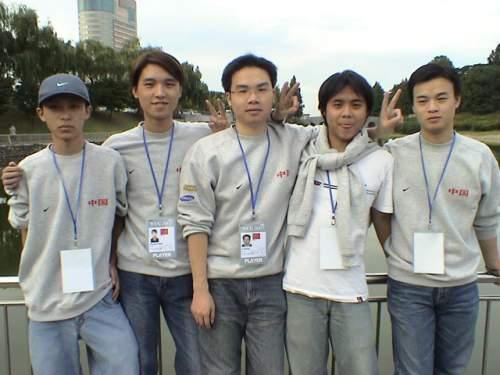
The month-old team that swept WCG China
The opponents standing between deViLU and WCG were the star-studded rosters of Chinese Counter-Strike's absolute golden age, and most of those players already carried the aura of legend. There was ICE, led by the legendary veteran star KING. There was the tournament favourite Evil | Zero, made up of Perfect, Niaoniao, OY, KinGZ, and Butcher. There was the famous Rainbow team from Guangdong. There was China.V, the notorious band of guerrillas who had collected prize money at events all over the country until the competition for winnings ended in a real-life confrontation. There was NP from Guangxi, who had beaten deViLU not long before and entered the national final as the top seed out of the Beijing region. And do not forget that wNv, the team Alex would later join, were in the field too. Anyone with even a passing knowledge of Counter-Strike history can see that every one of those teams was a formidable opponent for a squad that had existed for only a month.
They had come this far, so they might as well take them on. To everyone's surprise, they tore straight through the field on day one.
deViLU sent every one of those teams into the losers bracket, which naturally caused an enormous uproar and a great deal of argument online. Every kind of conspiracy theory and accusation of a fix appeared. It was not only the fans who could not accept it; the players on the other teams could not either. On the second day, the four teams remaining in the losers bracket jointly demanded that the matches be played with anti-cheat software running. deViLU beat them anyway, then defeated E | Zero again in the grand final to win the right to represent China at the WCG world finals in South Korea. Even so, the doubts on Chinese forums kept coming in waves.
Alex had no attention to spare for any of it, because everything about being abroad thrilled him. Before 2003, players were not allowed to talk during Counter-Strike matches in China. You could not even speak after winning, only sit there clapping like a wooden dummy. It was a bizarre situation, a very Chinese quirk of the early Counter-Strike rulebook, and the origins of that deformed rule and its eventual repeal would fill an entire essay of their own, so I will leave that for another time.
Those warped domestic rules meant Alex only discovered at the WCG 2003 world finals that in a Counter-Strike match, apart from staying quiet while dead, you can talk as long as your character is alive, and cheer, and even trash talk. Alex had an absolute blast. Beyond simply enjoying the game, he also got a close-up look at world-class aim and world-class tactical play, which did a great deal to shape the tactical and leadership system he would later build.
Above all, when he watched Sweden's SK beat America's 3D in the WCG final and hold up a US$50,000 cheque along with the WCG gold medal, Alex acquired a new target: world champion.
WCG ended. Alex and his friends had cut their way through the field and given Chinese Counter-Strike its first top-eight finish at WCG, finally proving their strength to the world, and at that point the arguments and suspicions on the domestic forums died down. Incidentally, Chinese Counter-Strike went on to make the WCG world top eight three times, and Alex was there for all three.
Back to that moment. CCTV's program Esports World had filmed WCG 2003 from start to finish and aired several documentary episodes on CCTV5 to an enormous audience. deViL*U became famous, and so did their captain. The Chongqing Morning Post ran a special feature on Alex's story, which fundamentally changed how his family viewed his work in esports. His own circumstances changed enormously too. He had spent every day worrying about whether his salary would be delayed or whether the team would suddenly fold. After the WCG top-eight finish, every club in China was trying to sign him.
From the U team to wNv
After weighing his options, Alex accepted the terms offered by Oldfox, the owner of the Suzhou team Su.Z: the team could be managed remotely, each player would get 1,800 yuan a month, and all they had to do was wear the team tag and compete. He took the U team back to Chongqing. Everything seemed to be heading in the right direction, but the passion of WCG slowly leaked away in the daily grind of practice, replaced by comfort and self-satisfaction, and the team began losing match after match. All the frictions and problems that victory had papered over surfaced one by one.
In May 2004 the U team played the ESWC final in Beijing, coming all the way up from the losers bracket only to lose to wNv at the end. Alex cried, unable to accept it. Li Jie and Ma Chao, wNv's managers, came to see him specially and offered him 5,000 yuan a month to build a brand new all-star team. Alex turned them down. He did not want to give up, and he intended to take his own team into WCG for one more attempt.
At the WCG China national final in July, though, Alex's team were eliminated in the group stage. He was heartbroken. Li Jie and Ma Chao came to see him again, and this time, thoroughly discouraged and ready to try a change of scene, Alex accepted wNv's invitation.
wNv had originally been founded with two squads, wNv.Nerver and wNv.Wisdom. After a series of mergers and adjustments, wNv.Nerver became wNv.CN and wNv.Wisdom became wNv.Gaming, the team Alex led. Here are the golden-era rosters of that period:
wNv.CN: Ray, Bigun, Rap, Aqi, aPs
wNv.Gaming: 44'alex, tK, sakula, Jungle, mikk
In December 2004, half a month after wNv.Gaming came together, they won the Aomei King of Kings tournament, with CN finishing as runners-up. wNv's training base was in an office building at the time and even had a dedicated trophy room. The conditions matched the standard of China's very best esports clubs.
That was also when Alex was formally chosen as the team's in-game leader. Once he began thinking about the game as a whole, and combined that with everything he had learned from years of football training and years of esports team training, he started to form his own understanding and his own system for how an esports team should be trained and managed.
Alex says that when he played football, his greatest strength was his willingness to carry the ball and take players on, but inside a professional club the coaches made their trade-offs, the players formed their factions, and an individual's strengths were gradually ground away. He believes that is wrong. In his view, training should be tailored to each player's talent so that every one of them can play to his own strengths, encouraging them to express what makes them distinctive while coordinating the teamwork and the unspoken understanding between them. Only then can a team's full energy be released.
The golden years, and two months in Seoul
It was under exactly that approach that wNv.Gaming, after Sakula joined during the Spring Festival of 2005, opened their glorious era. First they comfortably earned their place at ESWC in France. Then they won eight matches in a row to reach the world's top eight, before losing narrowly to Mouz, 14 to 16. WCG 2005 was chaotic as well: the world finals used Counter-Strike: Source, or CSS, a game that looks like Counter-Strike but is fundamentally different from CS 1.6. Although wNv.CN had won the Chinese spot, they gave it up because they had never practiced CSS at all. WCG went back to CS 1.6 in 2006, but with Counter-Strike's golden age already fading, the change no longer mattered much.
Back to wNv.Gaming in 2005, who really were flying, full of youth and confidence. At the Asian qualifier for WEG's third season in South Korea, wNv.Gaming eliminated Japan and beat the other Chinese team, AS, the team that 117 in the earlier photograph played for. In November 2005 they went to South Korea as the top qualifier, together with AS, to represent Asia in WEG's two-month league.
Those two months transformed wNv.Gaming's level completely. Credit is due to WEG here. For the third season they secured a 2 billion Korean won investment from CJ Media, which gave WEG the budget to house every player in an excellent hotel in Seoul and let them practice every day. The schedule was also paced beautifully, with only one or two matches a week, so every team could study its next opponent in fine detail and had ample time to design tactics specifically against them. Alex and his teammates benefited enormously in terms of tactical understanding. By the later stages, they only needed to see how the other side had positioned itself to predict where it would go, and if they noticed an opponent changing style they immediately had a new answer ready.
This is where the beauty of esports lies: the battle of wits and nerve, the contest of mechanics and execution, pushing a team's collective intelligence and mutual understanding to the limit. The more wNv.Gaming played, the more excited and confident they became. They finished those two months of study abroad with a perfect record before returning home for the final showdown against South Korea's Project_kr, the scene with which this chapter opened.
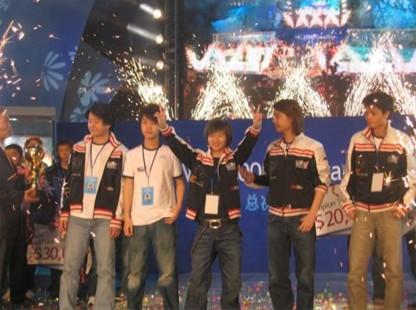
The decline
I would very much like to end the chapter right at that moment. People who worked hard finally made their dream come true. What a perfect ending.
Over the past decade or more I have worked on a lot of esports projects, but at heart I am still a fanatical Counter-Strike fan. For me, perhaps no other game has ever made me quite so crazy. It is no exaggeration to say that Counter-Strike was my youth. So personally, I would love to close this piece with a single line: and from then on, they lived happily ever after.
But reality has no fairy tales. Life went on, and it went on in the shape of decline.
Alex says that once the dream and the goals had all been achieved, confusion followed. He had already won a world championship, and he had no idea where his next goal was supposed to be. Their training volume dropped to less than half of what it had been. After they won the WEG Masters and the ESWC China title in 2006, the feeling that they were something special only grew stronger. Unbroken success makes people blindly confident.
Looking back at that period now, he has a great deal to reflect on. Many of their matches were won 2:1, which meant they had already started losing, that opponents were studying them and closing the gap, while they themselves were not improving and were still running their old tactics.
The alarm finally sounded. They went to France for ESWC 2006, but were knocked out without even getting through the second group stage, which left the fans back home who had expected so much of them stunned.
After the team returned to China, wNv not only failed to wake up, they went to the other extreme and made wholesale roster changes, swapping Aqi and Bigun from the CN squad with tK and Mikk from Gaming. They did then win the Chinese qualifiers for WSVG, WCG, and KODE5, but the distance between the players grew wider and wider as competition and other tensions set in.
After losing to NIP at the KODE5 world finals in particular, every conflict piled up to a breaking point. In Alex's words, it was like a tower built without solid foundations: the smallest storm would bring it down.
Finally, at a session where the players had drunk too much, the recriminations buried in everyone's heart burst out. It started with words, then Jungle lost his temper and punched Aqi, and Aqi grabbed a bottle to swing back but injured his own hand instead and needed a lot of stitches. That directly cost them at the WCG world finals in Italy half a month later, where wNv.Gaming lost to a Korean team in the round of 16.
Back home, nobody had sobered up yet. Apart from keeping Alex, Jungle, and tK, they kept swapping out the other two players, even poaching people from all over to replace them, and the changes went on from 2006 all the way to the Spring Festival of 2007.
By then Counter-Strike's golden age was already receding, and even Warcraft III's golden age was nearly over. DOTA was starting to take shape in China, and the number of people playing Counter-Strike, and the number of people paying attention to it, had both dwindled badly.
Alex says he sometimes wishes they could have stopped at the moment they won WEG in 2005.
But life has no "if only."
In December 2010, after competing at WEM, the successor to WEG, Alex was thoroughly worn out from all the wandering, and he formally retired and joined BenQ in Suzhou, where he took charge of esports promotion. In 2012 he married and made his home in Suzhou, and in his spare time he put together a Counter-Strike retrospective video series, going through the stories and the tactics behind all kinds of match demos from 2003 to 2011.
At the end of the interview I said, strike a pose and let me take a photo. Alex immediately produced his signature move, still smiling that sunny, playful smile. There were just a few more lines at the corners of his eyes.
Alex, Bian Zhengwei, China's world-class Counter-Strike in-game leader.