One More Way: How Chinese Esports Survived
A talk given by BBKinG (Liu Yang) at TEDxSuzhou in 2015. Originally published on Zhihu on May 16, 2015. Translated from the Chinese original: 让路更多一些 我在TEDx讲中国电竞
Watch the full talk (in Chinese): TEDx演讲 中国电子竞技 让路更多一些 on Bilibili
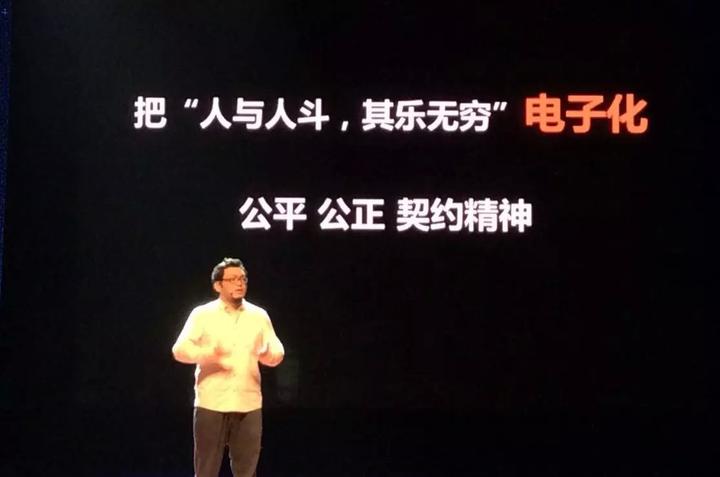
People often ask me, what exactly is esports?
My answer is simple. Esports is what you get when the age-old joy of people competing against people goes electronic. The one condition is that it must be built on fairness, impartial rules and respect for agreements.
So unlike some, I believe any game can have an esports mode, and anyone can be an esports player. Look around. Older folks play cards online. Kids sit together comparing Angry Birds scores on their iPads. Girls dance against each other in motion-controlled games. Young people team up in Dota and League of Legends, and 3D virtual-reality games keep getting better. As long as these games grow on a foundation of fairness, impartial rules and respect for agreements, they will produce tournaments, stars, clubs, media, streaming platforms and the whole complex ecosystem we call esports.
That is my understanding of esports. It takes less than a minute to say. Behind it are more than ten years of hard exploration by countless esports people around the world.
In 1999, Korea launched OngameNet, the world's first professional gaming TV channel, the OGN that is still famous today. The same year they founded KeSPA, the Korean esports association. Which means that by 1999, Korea already had a working model:
TV channel + esports + KeSPA
It was a powerful model. The TV channel came with built-in reach and ways to make money. The tournaments were the product. KeSPA enforced the rules of the industry, so every link in the chain held together and the whole thing could grow steadily.
And Korean gaming channels reached almost everyone. In 2006, OGN was in more than 13 million Korean households, in a country of 47 million people. Add government support, and sponsors like Korean Air, Samsung and Hyundai. A broad audience plus a complete business model put Korean esports into a virtuous cycle from day one.
Chinese esports in the same period was growing fast, right up until 2004. Through international events like WCG, CPL and ESWC, we saw how well the Korean commercial model worked, and we considered it the best model of its time.
So when the Chinese sports authority made esports the country's 99th official sport on November 18, 2003, we were thrilled. It meant we could finally build the Korean model in China openly. Many Chinese TV stations already ran gaming shows, including Games, Games, Games on Travel Channel, You Dian Feng Kuang on Shanghai TV, Game Club on Xi'an TV and The World of Esports on CCTV-5. Their ratings were near the top of the charts. At that moment, Chinese esports had extraordinary resources and market prospects.
All of it stopped on April 12, 2004. That day, the broadcast regulator issued a notice banning TV programs about computer and online games. Every show I just mentioned was cancelled. From that moment, the Korean road was sealed off in China for good.
Fortunately, Chinese esports fans and esports people did not give up. We found a new road, the only road we had:
Internet + esports
How exactly do you walk it? We were not sure at the time. But a new internet technology arrived just in time. It was called P2P live streaming. Put simply, the more people watched a stream, the faster it ran. In 2004, Chinese platforms built on this technology appeared, PPLive and PPS, and Chinese esports found its new model:
P2P streaming + tournaments + sponsors
Thanks to that model, from 2005 on, Chinese fans could watch top domestic and international matches from home or from an internet cafe. The best example was the WCG grand finals of 2005 and 2006, when Sky, Li Xiaofeng of Team WE, won back-to-back world championships and stood on the podium draped in the national flag, watched live by esports fans all over the world. After that, when we went to talk to sponsors, we finally did not have to spend the first hour explaining what esports was.
But honestly, that model was badly limited by its era. Even today, after years of user growth, online streaming audiences are still far smaller than traditional media. Ten years ago the gap was worse. So for a long stretch, esports lived hand to mouth. Survival, not growth.
And what was the most comfortable way for an esports team to live in those years? Take a guess.
The rich kid model.
Do not laugh. Without those second generation rich kids who genuinely loved esports, Chinese esports might not have made it through its hardest years. But that model had one big problem. It was unstable. The money could stop at any moment.
So when the global financial crisis hit in 2008, esports had no sponsors, narrow channels, and almost no way to make money. It fell back into darkness. Many organizations were scattered. Many esports people were forced into other industries.
From 2008 to 2010, people in Chinese esports endured a great deal. Looking back, those three years were worth it. The industry-wide depression burned one lesson into everyone: ideals alone cannot sustain an industry. We needed our own products, our own channels and our own ways to make money. As the comedian Guo Degang puts it, first you have to live well. Only then can you talk about growing.
By the time the crisis passed in 2010, I would say Chinese esports had finally grown up. And that year several important things happened. On December 8, 2010, Youku went public, and ahead of the IPO it pushed hard into gaming content, especially esports. Retired Dota players and casters started their own channels there. Group buying took off. The joint-operation business model for browser games appeared. And most important of all, the post-1990 generation turned twenty.
In short, esports suddenly had new channels and new ways to earn.
In 2011, there was a gaming apparel brand whose founder was an esports fan with resources in the clothing business. He combined the two and made game-themed apparel, then asked a famous caster to promote it. The caster opened a Taobao shop, and in the first month it did 300,000 yuan in sales. Sales kept multiplying in the months that followed.
Suddenly everyone realized esports could work this way. Esports stars and casters opened their own shops. First they sold mice and keyboards, then clothing, snacks, luggage, daily goods, travel packages, even adult products. This is the famous “meat-floss-pastry model” that people love to mock. I think its success marked the birth of a new Chinese esports model:
Youku + Taobao + esports
I believe this model was a turning point. I call it monetizing your own attention. From this moment on, Chinese esports had its own channels, its own products, its own income. Even with no sponsors and no rich kids, esports could survive.
But right then, an old contradiction finally boiled over. I call it the bubble war of Chinese esports.
These bubble wars have been fought several times in the seventeen years of Chinese esports. The biggest one broke out in the Dota era around 2010. The industry's growing influence attracted a flood of capital, and the first thing the new money did was fight over the industry's core resource, the players. The poaching war went mad. Buyout clauses meant nothing. Your contract says the penalty is half a million or a million yuan? They would throw the money in your face, say this player is mine now, and walk away with him.
When the war ended, every club that fought in it realized they had all lost. The money they burned could never be earned back. So the industry came to its senses. This could not go on. Esports had to rebuild its contract spirit. There had to be rules.
In 2011, the twelve biggest professional clubs in China banded together and formed an esports alliance. After nearly five years of refinement, Chinese esports now has a stable structure. The alliance gives everyone a table to negotiate at. Each season has a proper transfer window where club managers discuss transfers with each other. Cheating, boosting, throwing matches, even how players dress and speak at events, all of it is covered by written rules.
Then in August 2014, Amazon bought Twitch for 970 million US dollars, and Twitch-style streaming platforms exploded in China, setting off a new wave of capital and public attention. The model is getting more complex. Let us judge it a few years from now.
As for the future, I believe esports is like cinema at its birth. It has dramatically lowered the cost and the threshold of mass entertainment, and it is even cheaper, more convenient and more interactive than the movies. That will bring a new revolution in interactive entertainment, and a huge industry will grow out of it.
Finally, I want to be clear. I am not here to tell you esports is wonderful and perfect and everyone should come play. No. Esports is a microcosm of this society, and many problems remain unsolved.
For example, we often get phone calls from parents. My kid wants to quit school to go pro. I have tried everything and I cannot stop him. Could you get an esports star to talk him out of it? We usually help.
Because I used to be that kid. So I know that deep down, most of these kids are not actually sure esports is their path. They have hit a wall at school, and they are subconsciously searching for a way out.
And that is the root of the problem. Beyond the single narrow path of the gaokao, China's national college entrance exam, our society offers kids too few roads. So the loud, dazzling world of computers, the internet and games becomes the straw they grab in a panic.
Honestly, I do not care whether a kid chooses esports or not. What I care about is whether the road he chooses is one he truly loves, one that fits him, and whether he knows how to walk it.
The duty of our generation is to keep exploring and opening new roads, and to build a world that can tolerate and nurture new cultures. Then the next generation can dare to dream, dare to choose and be able to act, while every healthy subculture gets its chance to sprout and grow.
That is the entire purpose of this talk. Thank you.